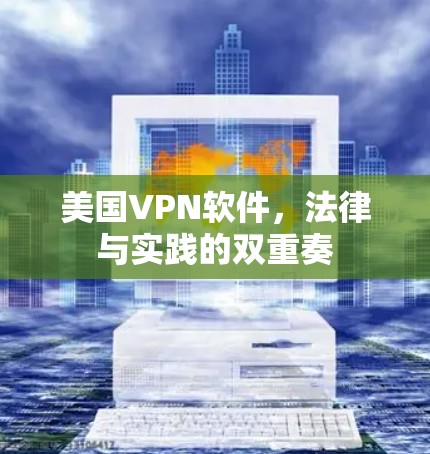
美国VPN软件,法律与实践的双重奏
 gfv3355771
 美国的网络服务提供商(NSPs) provide a wide range of services, including Virtual Private Networks (VPNs), to enable users to access the internet in their own country while complying with local laws. Among these services, VPNs are particularly popular for remote work, video conferencing, and accessing local resources. However, the use of VPNs in the U.S. is deeply intertwined with the country's legal framework, which introduces both opportunities and challenges for users.
The Legal Framework of U.S. VPN Use
The U.S. has a robust legal system designed to protect national security and individual privacy. The Netscape Law and the Electronic Frontier Protection Act (EFPA) are key components of this framework. These laws mandate that U.S. citizens have the right to access U.S. networks and services, provided they do not violate other laws, including the Digital Right Management Act (DRMA). Users must also be aware of the Strong Law of Remainder (SLR), which prevents the use of surveillance or monitoring tools that could be misused.
The Netscape Law regulates the creation and use of VPNs, requiring companies to obtain a license from the U.S. government before providing services. This licensing process is a necessary step to comply with U.S. law, but it also means that users must actively engage with the software to avoid legal issues.
The EFPA is more focused on protecting individual privacy. It requires companies to obtain a license from the U.S. government before providing access to personal information. This includes preventing the sale of personal data or the use of it for surveillance purposes. While the EFPA is more targeted, it plays a critical role in ensuring that users are not exploited by VPN services.
The Impact of VPN Software on U.S. Law Enforcement
The use of VPNs in the U.S. is often targeted by law enforcement. Law enforcement agencies are increasingly using VPNs to monitor and intercept communications from individuals suspected of violating U.S. laws, such as those related to cybercrime or domestic terrorism. By leveraging VPNs, law enforcement can bypass traditional surveillance methods and gain access to sensitive information.
In some cases, law enforcement has even been linked to using VPNs to access personal data. For example, a law enforcement officer might use a VPN to intercept and monitor a phone, even if the device was not physically located in a law enforcement zone. This highlights the growing importance of VPNs in the U.S. law enforcement ecosystem.
The Role of Users in U.S. VPN Use
While VPNs are powerful tools for accessing the internet, their use is not without risks. Users must be aware of the legal implications of using VPNs, including the possibility of violating the SLR. Additionally, the EFPA imposes restrictions on the sale of personal data, which can be a concern for individuals who are using VPNs to access information from unknown sources.
The Digital Right Management Act (DRMA) also imposes restrictions on the use of private data in the U.S. This includes requiring companies to use strong encryption to protect data transmitted through VPNs. While this is a necessary measure, it can be a barrier for some users who are concerned about the security of their data.
The Future of U.S. VPN Use
The U.S. government is actively working to regulate VPNs, both through legal means and through technological innovation. The SLR was introduced in 213, but it has faced criticism for being too broad and not sufficiently enforced. The EFPA remains a key tool for protecting individual privacy, but it is unclear how it will be implemented in the future.
In response to these challenges, the U.S. government has been pushing for stricter enforcement of the DRMA and the SLR. Additionally, technological companies are investing in stronger encryption and data protection measures to comply with U.S. laws. These efforts are critical to ensuring that users can access the internet in their own country while protecting their privacy.
Conclusion
The use of VPNs in the U.S. is a complex interplay of legal, technological, and personal factors. While VPNs are invaluable tools for accessing the internet, they are not without risks and challenges. Users must be aware of the legal implications of their use and take steps to protect their privacy. As the U.S. continues to grapple with its legal and technological landscape, the importance of VPNs will only increase.
In summary, the U.S.VPN industry is a dynamic and evolving field, with both opportunities and challenges. While VPNs provide a convenient way to access the internet, they must be used with caution and awareness to ensure compliance with U.S. laws and protect privacy.
@版权声明
转载原创文章请注明转载自免费VPN加速器-2026年最佳梯子推荐:稳定翻墙机场节点,胜过传统VPN加速器,网站地址:https://vpn-mianfei.com.cn/